

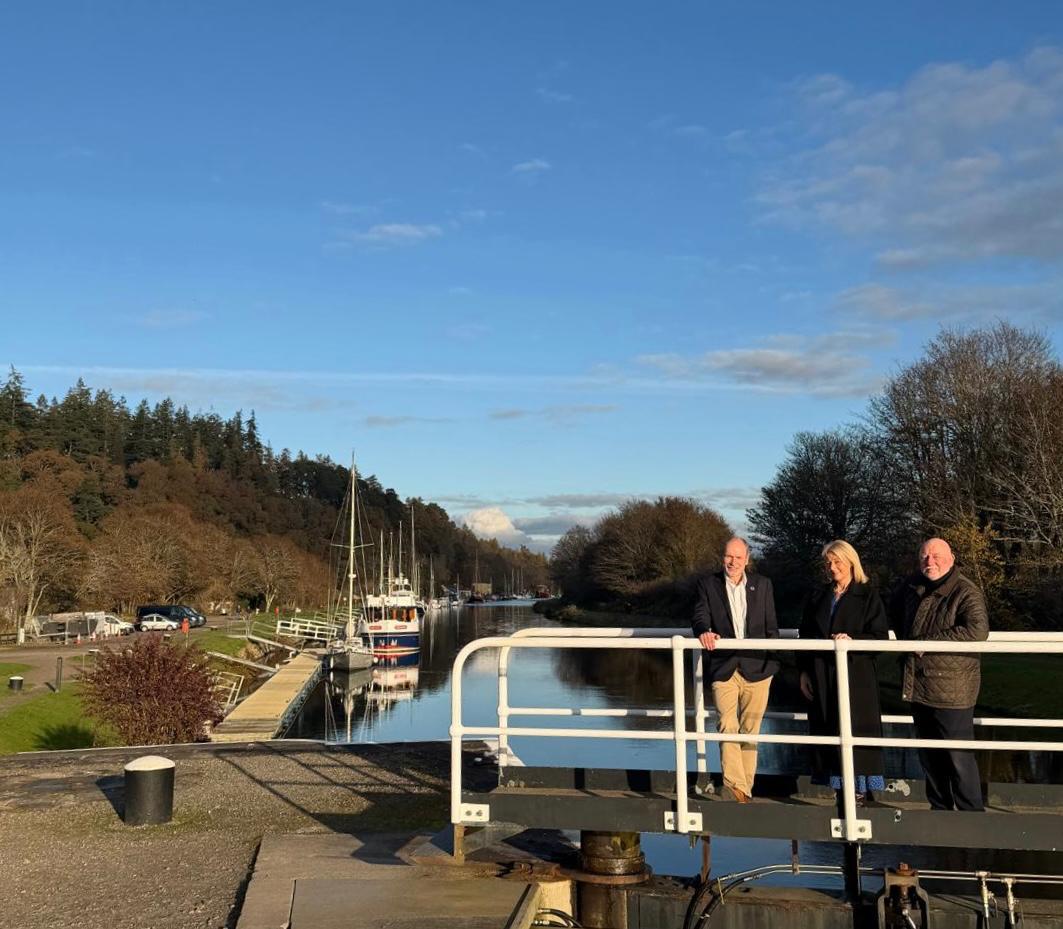
Strategic partnership aims to unlock the potential of the Caledonian Canal, Loch Ness and the Great Glen, bringing together tourism, renewable energy, heritage and community prosperity.
Scottish Canals is joining Highland CIC as a strategic partner and becoming a member of the Highland Renewables Network, supporting a bold vision to position Loch Ness and the Great Glen as a flagship example of sustainable development.
The partnership will bring together Scottish Canals, Highland renewable energy developers, Cobbs Group, one of the largest tourism and hospitality businesses in the Great Glen, and local communities to explore ambitious new opportunities for investment, innovation, sustainable tourism and community prosperity.
More than 200 years after Thomas Telford’s engineering vision helped transform the Highlands through the creation of the Caledonian Canal, the ambition is to build on that remarkable legacy of the Industrial Revolution and ensure the waterway plays a defining role in the region’s future.
Scottish Canals: Building on Telford’s extraordinary legacy
Richard Millar, Chief Operating Officer of Scottish Canals, said: “Thomas Telford’s vision for the Caledonian Canal was extraordinary in its ambition, creating an engineering legacy that continues to shape the Highlands more than two centuries later.
“We want Scottish Canals to be at the heart of the Highlands’ next great transformation, bringing the same ambition and determination to the opportunities ahead.
“Becoming a strategic partner of Highland CIC and joining the Highland Renewables Network gives us an exciting opportunity to work with communities, businesses and renewable energy developers to help shape that future.
“Telford left us an extraordinary legacy. Our ambition must be to create one that future generations will be equally proud of.”
Highland CIC: A global opportunity for sustainable development
Yvonne Crook, Chair of Highland CIC, said: “Loch Ness and the Great Glen are globally recognised for tourism, yet this is also an area at the heart of a region described as the UK’s power station.
“What an extraordinary opportunity to bring these two worlds together and demonstrate how sustainable development can create lasting prosperity for Highland communities.
“We are delighted that Scottish Canals shares our ambition. Working alongside Cobbs Group, renewable energy developers and local communities, we want to think boldly about how we connect our natural and cultural heritage with the scale of investment and innovation coming to the Highlands.
“This is exactly the kind of strategic partnership we need to help realise our vision for the Highlands to become a world leader in sustainable development.”
Cobbs Group: Turning ambition into economic opportunity
Willie Cameron, Highland CIC Board Member and founder of Cobbs Group, said: “As a major tourism employer in the Great Glen, we see first-hand both the extraordinary potential of this iconic destination and the challenges facing our communities.
“By bringing together Scottish Canals, renewable energy developers, tourism businesses and communities, we have an opportunity to think on a much bigger scale about the future of Loch Ness and the Great Glen.
“This is about turning vision into investment, creating opportunities for local businesses and ensuring our communities share in the prosperity generated by one of Scotland’s most remarkable regions.”
A shared ambition for the Highlands
The partnership supports Highland CIC’s wider call for a Highland Sustainable Development Plan, bringing together business, community and public sector leadership around a shared vision for the region.
The announcement comes ahead of the Highland Sustainable Development Summit on 18–19 November 2026 at the Kingsmills Hotel, Inverness, where Highland, national and international leaders will explore how the region’s extraordinary natural wealth and unprecedented investment can deliver long-term prosperity.
The Caledonian Canal, Loch Ness and the Great Glen offer an opportunity to demonstrate that ambition in practice – connecting one of Scotland’s greatest achievements of the Industrial Revolution with the opportunities of the renewable energy transition.
—