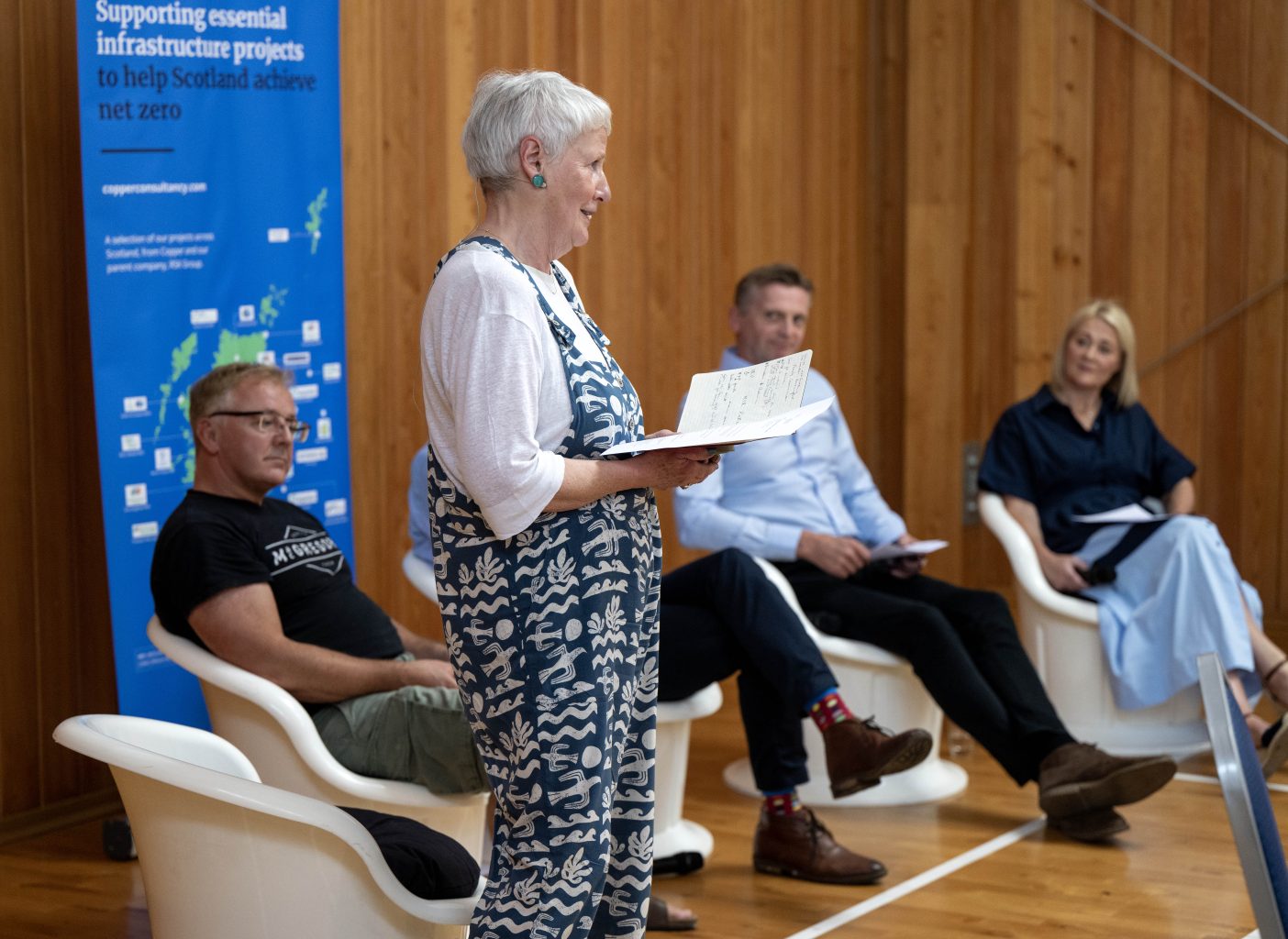
Maggie Cunningham, co-Chair of the Highland Council Commission on Poverty and Equality, Chair of Kyle and Lochalsh Community Trust, Chair of An Comunn Gàidhealach and Board member of Highland CIC, writes about the opportunity to power a Highlands renaissance.
For over a decade, beginning in 2004, I was a weekly car commuter from Plockton to Glasgow – travelling at all hours, and often early morning and late evening. I only remember one occasion when I was diverted via Connel and Appin just to rejoin the A82, because of an accident. During that time, detours were unusual. It was, and remains, a spectacular journey in terms of landscape, but over time it has become increasingly clear just how fragile and overstretched the Highland road network really is.Today, road closures, due to accidents and structural failures are near-daily occurrences. It is no exaggeration to say that our road infrastructure is in a perilous state.
Much of this decline stems from chronic underinvestment and a lack of strategic maintenance. Many roads are simply no longer fit for purpose. Designed for lighter traffic, they are now traversed by larger, heavier vehicles – many of them unsuited to such terrain – which not only accelerate the damage but too often fall victim to it. The result is not just inconvenience; it’s danger. Damage to vehicles, disruption to essential services, and, in too many cases, injury or loss of life.
It doesn’t have to be this way. While it’s clear that public agencies currently lack the funding required to maintain, let alone upgrade, our transport infrastructure, there is an opportunity on the horizon. The renewable energy sector, which is expanding rapidly in the Highlands, presents a potential windfall. If harnessed strategically and locally, this could be transformative.
Highland CIC and Highland Renewables, with an increasing support base, are already advocating for a joined-up, long-term approach – one where renewable energy revenues are reinvested directly into infrastructure, community development, and sustainability. Such a model could alleviate many of the pressures we now face, benefiting both residents and the growing number of visitors to our beautiful part of the world.
Public transport, in particular, would stand to gain immensely. In remote communities, access to reliable, affordable transport is not a luxury – it’s a lifeline. Attending a hospital appointment or getting to work every day should not depend on whether a single-track road is open. A well-maintained and resilient transport network would make a tangible difference to countless lives.
But more than that, this is about envisioning a sustainable, equitable future for the Highlands. A strategic, holistic approach could ensure that rural villages are not left behind while towns become hubs of opportunity. Young people should feel inspired to stay – not forced to leave due to lack of opportunity. Equally, older residents should have the comfort of knowing they will be supported close to home, not shuffled through an overstretched and underfunded care system.
We live in one of the most stunning parts of the world. But natural beauty alone is not enough. Without adequate infrastructure, poverty becomes entrenched, opportunity shrinks, and communities suffer. With foresight and political will, the renewable revolution could do more than power homes – it could power a Highlands renaissance, making our region one of the best places in Europe to live, work, visit and thrive.