

By Yvonne Crook, Chair, Highland CIC
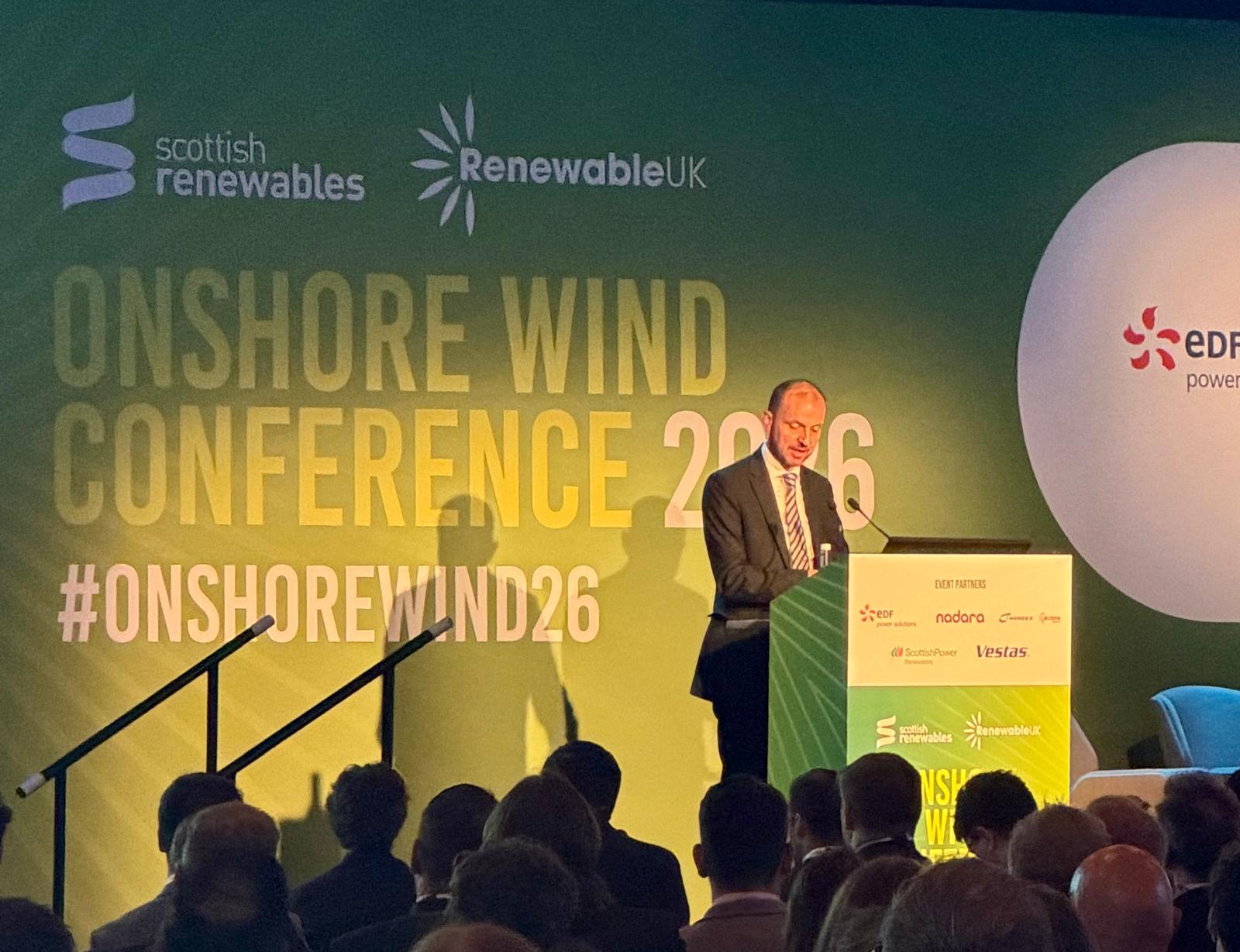
It was a privilege to attend the Scottish Renewables conference and to feel first-hand the energy, ambition and confidence of a sector that will play a defining role in Scotland’s future. It was equally encouraging to meet so many of the developers, businesses and partners already supporting Highland CIC and our Highland Renewables Network.
One message resonated with me throughout the day: community benefit is evolving. The conversation has moved on, towards local priorities, shared ownership and giving communities a genuine stake in the transition. The ambition around shared ownership, in particular, and the determination to bring communities along on this journey, were heartening to hear.
I have seen what that can achieve. I live in Moy, within Strathdearn, a community that has worked strategically and constructively with renewable energy developers for many years. The impact on our lived experience has been hugely positive. It demonstrates what becomes possible when developers and communities build relationships, think long term and deploy community benefit strategically. We should celebrate such examples and learn from them.
But the scale of what is now unfolding in the Highlands demands that we add another dimension to the conversation. Alongside local priorities, we must ask: what are our regional priorities?
The Highlands is carrying a huge share of the energy transition, and this is no longer simply a story about onshore wind. The region holds enormous potential for the next generation of hydro and pumped-storage hydro, alongside new and repowered onshore wind, solar and battery storage. Major grid investment will unlock much of that capacity, while floating offshore wind could open an extraordinary new chapter for the Highland economy: our ports, our supply chains and our communities.
Then there is repowering. The Highlands was at the forefront of earlier generations of renewable development. As those assets reach maturity, repowering offers another generation of investment, increased capacity and renewed relationships between developers and communities. Taken together, we could be looking at decades of energy investment flowing through the Highlands. That changes the scale of the question.
In one area of the Highlands alone, communities representing around 10,000 people could collectively receive approximately £50 million in community benefit over the lifetime of local projects. Elsewhere, communities have access to very little, sometimes none at all.
That is not a criticism of the communities receiving significant benefit, nor of the developers providing it. Quite the opposite. But it illustrates why we must think strategically about the collective opportunity, because poverty does not stop at a community council boundary. Neither does fuel poverty. Nor do the pressures on a social care system increasingly dependent on charities and third-sector organisations to support our most vulnerable people.
Consider the facts. Around 10,000 Highland children live in poverty. Roughly one in three households experiences fuel poverty. Some 70% of our peatlands are degraded. Our tourism economy must create greater value, not simply greater volume. Our extraordinary cultural heritage deserves a stronger strategy for its protection and development. We face profound challenges from climate change. And we still lack a sufficiently visible way of connecting our young people with the careers, skills and business opportunities this new economy could create.
None of these are arguments against renewable development. They are the reason we must make the very most of it.
The Highlands also faces a profound demographic challenge, which makes the opportunity before us even more important. If we get this right, the energy transition could help create the conditions for a very different future: more good jobs, stronger local businesses, better infrastructure, more affordable energy, healthier communities and genuine reasons for young people to stay, return or move here.
So perhaps the question is no longer simply: how should an individual community benefit fund be spent? It is also: what do we want this extraordinary period of investment to have achieved for the Highlands in 20 or 30 years’ time?
Could we look back on an energy transition that not only delivered national energy security and net zero, but also helped tackle fuel and child poverty; strengthened social care; restored nature and peatland; built stronger Highland supply chains; protected our cultural heritage; supported a higher-value, more sustainable tourism economy; and created genuine career pathways for our young people? For me, that is what a fair deal for the Highlands should mean.
Importantly, this is not about taking community benefit away from host communities. It is not about diminishing local decision-making. And it is certainly not about expecting renewable developers to solve every social, economic and environmental challenge the Highlands faces. Successful developments must generate commercial returns; without viable projects, there is no energy transition at all.
But alongside that financial return, surely we can be equally ambitious about the social, environmental and economic return to the region that is making it possible.
That requires partnership. Developers have an important role in ensuring projects create lasting local value, through meaningful engagement, community benefit, shared ownership, local procurement, skills and long-term relationships. Communities have a vital role too: shaping priorities, making informed choices and determining how local benefits are used. But there is an opportunity for all of us to look beyond individual projects and ask what this investment could achieve collectively.
Local benefit should remain local. But our collective ambition must become regional. There is already growing recognition across the Highlands that we need to think differently about the scale of this opportunity. Highland Council’s emerging thinking around a Highland Wealth Fund is a good example of the wider conversation taking place about how renewable investment might create a lasting legacy across the region.
But no single organisation, fund or mechanism can provide the whole answer. What feels increasingly important is developing a shared regional vision, shaped with developers, communities, businesses and public bodies, for what we collectively want this extraordinary period of investment to achieve for the Highlands. That does not mean replacing local priorities with regional ones. It means connecting the two.
That is the conversation we are developing through Highland CIC and the Highland Renewables Network, bringing together developers, contractors, businesses and community leaders to look holistically at the Highlands, rather than at individual developments. The discussions and plans in our strategic steering group are becoming increasingly ambitious and mature: not because any of us has all the answers, but because there is a growing willingness to consider the wider opportunity.
Our work is also beginning to attract international interest, including expertise connected with the United Nations and global impact investment. But the real strength of what is emerging comes from within the Highlands: from community vision and ambition, and from a strong and growing Highland Renewables Network bringing developers, businesses and communities together around a shared opportunity. International expertise and impact investment can help support that ambition, exploring how the enormous capital flowing through the region might be connected more deliberately to long-term social, environmental and economic outcomes.
There is another reason getting this right matters. We cannot allow the scale and pace of the transition to create deepening polarisation within Highland communities. Developers need communities that understand and engage with what is happening. Communities need developers they can trust as long-term partners. Businesses need access to the opportunities being created. And our young people need to see where they fit into this extraordinary period of change.
That is why I increasingly believe the Highlands needs a regional sustainable development plan capable of connecting these opportunities: community benefit, shared ownership, local supply chains, skills, youth, nature restoration, tourism, culture, social and impact investment. Not another layer of bureaucracy, but a shared direction.
Because if we can demonstrate that community benefit is not simply a transaction between a developer and a host community, but part of a much wider partnership for Highland renewal, I believe we can build far broader support for the energy transition across our communities and businesses.
The Highlands is not simply hosting the energy transition. We are one of the places making it possible, and our ambition for what it leaves behind should reflect that.
The opportunity is enormous. Let us make it count.