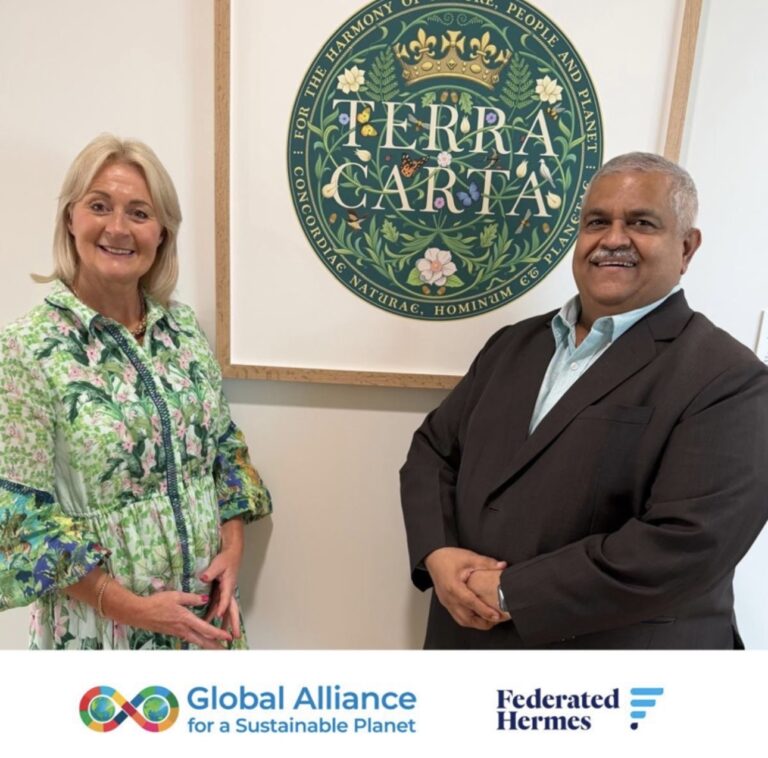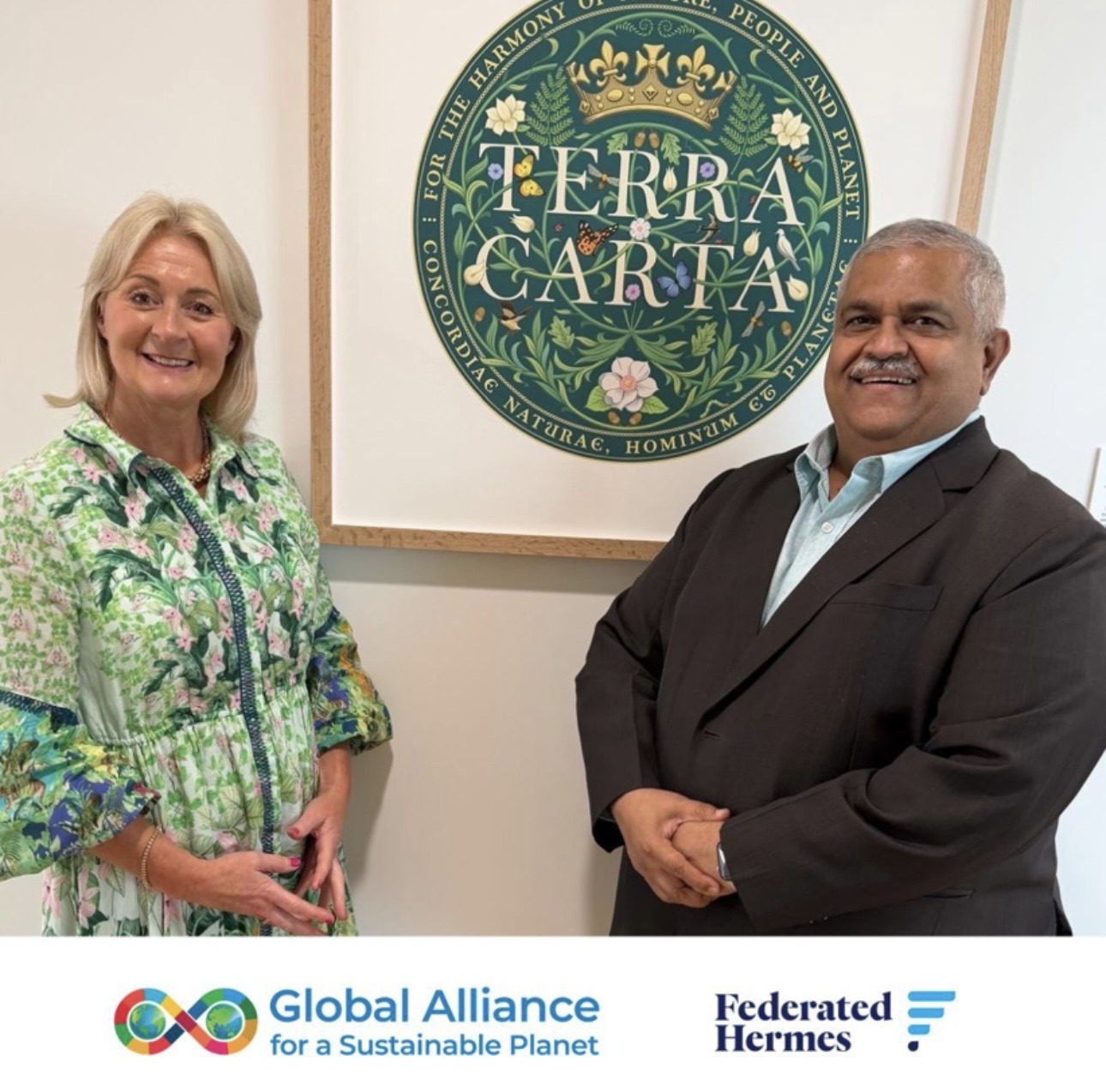
Highland CIC Chair joins international leaders at Federated Hermes to champion the Highlands as a ‘living laboratory’ for a just transition
With more than 75,000 people participating in London Climate Action Week, the event brought together leaders from international finance, environmental policy, academia and community development to explore how Scotland can move beyond fragmented, short-term projects towards long-term, systems-based approaches that ensure communities benefit from the energy transition.
Representing Highland CIC, Ms Crook presented the Highlands as a “living laboratory” for regenerative development, where renewable energy, natural capital, sustainable tourism and community wealth building are connected through a single systems approach rather than pursued as competing agendas.
She outlined Highland CIC’s ambition to create a cross-sector platform that brings together communities, businesses, academia, investors and the energy sector to unlock place-based investment and ensure that the significant opportunities arising from the energy transition generate lasting economic, environmental and social value for Highland communities.
Ms Crook joined a featured panel discussion alongside Andrew Mitchell, Founder of Global Canopy and Co-Founder of the Taskforce on Nature-related Financial Disclosures (TNFD), and Dr Pavan Sukhdev, Chief Executive of GIST Impact and UNEP Goodwill Ambassador. Together, they explored how systems thinking can help align investment, nature recovery and community prosperity, and why landscapes such as the Highlands have an important role to play in demonstrating how a just transition can be delivered in practice.
The discussion was co-hosted by Satya Tripathi, Secretary General of the Global Alliance for a Sustainable Planet (GASP), and Saker Nusseibeh CBE, Chief Executive of Federated Hermes, bringing together perspectives from global finance, environmental leadership and place-based development.
The event also featured contributions from leading organisations across Scotland and beyond, including Dr Chris Ransom of Durrell Wildlife Conservation Trust, India Hamilton of Craiganour Estate, Alison Stuart, Chief Executive of NESCAN Hub, David Innes, Chair of Action for a Fairer World, and Professor Tavis Potts, Director of the JUST-Systems research programme.
Yvonne Crook, Chair and Founding Director of Highland CIC, said: “The Highlands have an opportunity to become a living laboratory for regenerative development – a place where renewable energy, natural capital, sustainable tourism and community wealth building come together as one connected system, rather than competing agendas.
“The scale of investment flowing into renewable energy over the coming decades presents a once-in-a-generation opportunity. The challenge is ensuring that this transition delivers lasting benefits for the people and places where that investment happens.
“Communities should not simply host the energy transition; they should help shape it and share in its long-term value.
“Achieving that requires systems thinking – aligning investment, biodiversity restoration, economic development and social resilience around place. Short-term, disconnected projects will not deliver the transformation that is needed.
“This movement has taken five years of strategic thinking by business and community leaders who share a vision for the future of the Highlands. It was an honour to bring that Highland perspective to London Climate Action Week alongside internationally recognised leaders in sustainable finance, conservation and systems change.
“There is growing interest in the Highlands – not simply for our renewable energy resources, but for our potential to demonstrate how investment can create thriving communities alongside thriving natural landscapes. Highland CIC is now seeking partners who share that vision and want to help turn it into reality.”
The event explored how systems approaches can provide a practical framework for aligning public and private investment with biodiversity recovery, community empowerment and regional economic resilience. Discussions focused on ensuring that the transition to net zero is community-led and that the long-term value created through investment flows back into the places where that investment occurs.
As the Highlands enter a period of unprecedented renewable energy investment, Highland CIC believes the Highlands are uniquely placed to demonstrate how climate action can strengthen local economies, restore natural capital and build resilient communities through collaborative, place-based leadership.